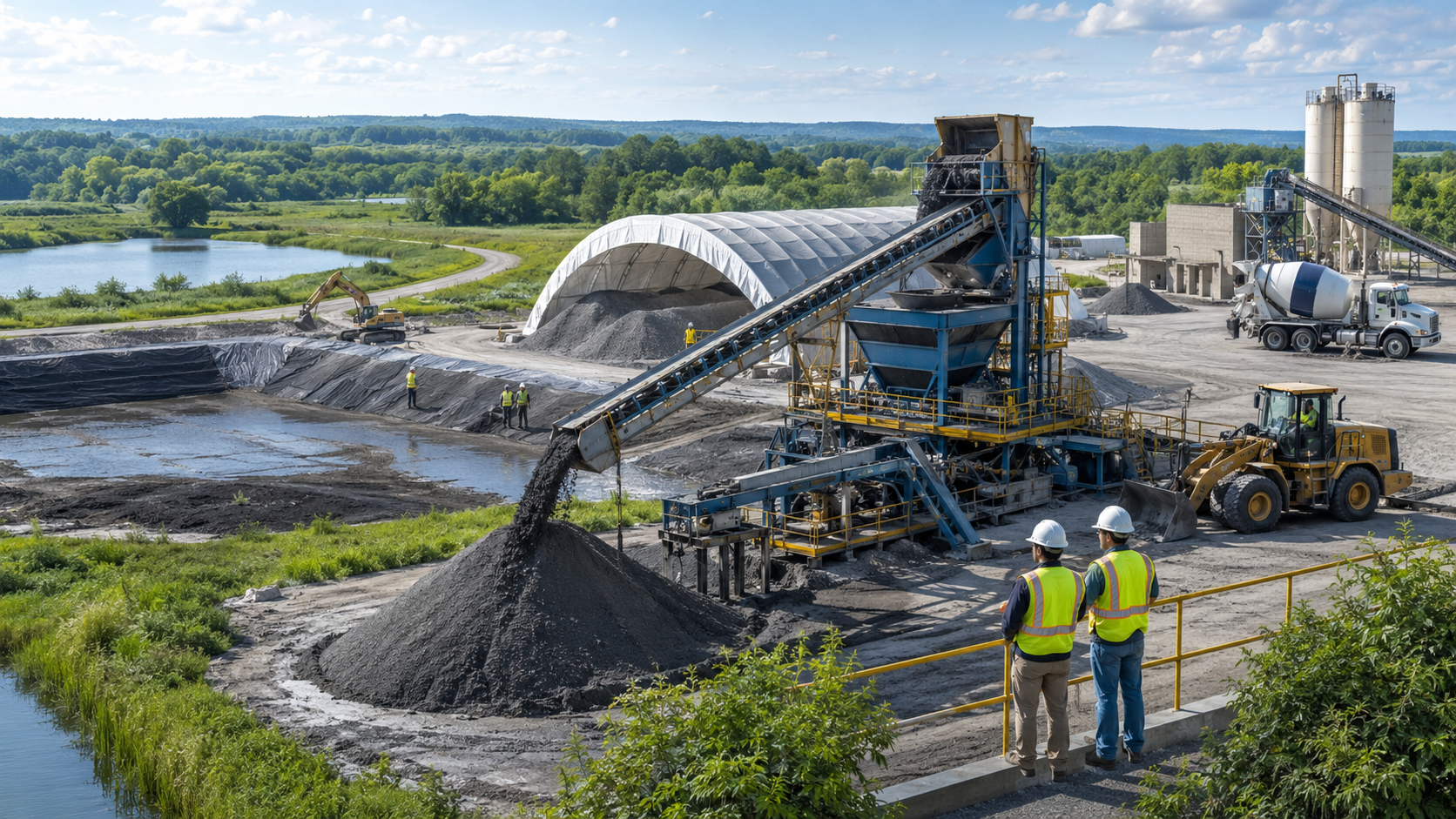
Legacy coal ash storage creates long-term environmental, operational, and regulatory challenges. Ash ponds and landfills can carry ongoing monitoring obligations, groundwater concerns, moisture exposure, erosion issues, and closure costs that remain in place for years. That’s why harvested coal ash remediation matters. When stored ash is removed as part of a broader cleanup strategy, it can help reduce site risk, lower remaining ash volumes, and support long-term closure or redevelopment plans.
At the same time, not every remediation-related project ends with disposal alone. In some cases, harvested ash can be screened, dried, sized, deagglomerated, or otherwise upgraded for beneficial reuse. That’s where harvested coal ash processing and harvested coal ash beneficiation can support broader remediation goals.
Table of Contents
What Is Coal Ash Remediation?
Coal ash remediation is the process of addressing the risks associated with legacy ash storage so a site can move toward a safer and more manageable long-term condition. Depending on the project, that may involve excavation, removal, containment, closure support, groundwater protection, or related cleanup measures. The goal is not just to move ash from one place to another but to also reduce exposure, improve compliance posture, and support a more durable site outcome over time.
Why Legacy Coal Ash Storage Creates Challenges
Legacy storage areas can create multiple problems at once. Ponds and landfills may leave ash exposed to moisture, stormwater, erosion, and dust, while variable material conditions can make future management more complicated. Some sites also carry long-term monitoring obligations tied to groundwater and closure performance. These issues are part of why coal ash pond remediation becomes such an important part of long-range environmental planning. Leaving large ash volumes in place can mean years of continued oversight, cost, and liability.
How Harvested Coal Ash Supports Remediation Goals
Harvesting can support remediation goals by physically reducing the amount of ash left in storage. That can make pond closure strategies more practical, reduce the burden of long-term management, and support broader site cleanup efforts. In some projects, harvesting is one part of a phased remediation plan tied to excavation, transport, and restoration. In others, it helps create more flexibility around closure timing, land use, and overall site strategy. The key point is that removal can help move the site toward a lower-risk condition.
The Role of Processing in Harvested Coal Ash Remediation
Once ash is harvested, processing plays an important role in making the material more suitable for reuse. Coal ash processing can include screening to remove oversized debris, drying to improve handling, sizing to create a more consistent feed, and deagglomeration to break apart clumped material. Depending on the ash source and project goals, carbon removal and additional quality control steps may also be part of the process. These steps do not define the remediation itself, but they can support a cleaner, more controlled path forward for the harvested material.
How Beneficiation Creates Reuse Opportunities
Beneficiation focuses on improving ash quality so it may meet the requirements for beneficial reuse instead of remaining part of a disposal stream. In the context of harvested ash, coal ash beneficiation can help reduce carbon content, improve consistency, and create a more usable final material. That matters because some reclaimed ash still has value if it can be upgraded to meet performance standards, especially performance standards required for reuse in concrete.
Sustainable Outcomes from Harvested Coal Ash Reuse
A well-planned harvested coal ash remediation strategy can do more than reduce the volume of material remaining in ponds or landfills. When recovered ash can be processed and beneficiated to meet the quality requirements for concrete, it may serve as a supplementary cementitious material, or SCM. This gives the project a productive outlet for material that might otherwise remain in storage or be transferred to another disposal site.
Using qualified coal ash in concrete can also support lower-carbon construction. Portland cement requires energy-intensive clinker production, which contributes significantly to the embodied carbon of conventional concrete. Replacing a portion of that cement with beneficiated ash can reduce the amount of clinker required while supporting concrete performance, depending on the material quality, application, and mix design.
This creates a more environmentally attractive construction material compared with concrete mixes that rely more heavily on portland cement. It can also reduce disposal volumes, recover value from a legacy material, and support more circular use of industrial resources. For remediation projects, beneficial reuse creates a path that addresses stored ash while supplying material for new construction.
FAQs About Harvested Coal Ash Remediation
What is harvested coal ash remediation?
Harvested coal ash remediation refers to removing legacy ash from storage areas as part of a broader effort to reduce environmental risk, support closure, and improve long-term site conditions.
How is harvested coal ash processing different from remediation?
Remediation focuses on site cleanup and risk reduction. Harvested coal ash processing focuses on conditioning the removed ash through steps like screening, drying, sizing, and deagglomeration so it can be managed or reused more effectively.
Can harvested coal ash be reused?
In some cases, yes. If recovered ash can be upgraded through harvested coal ash beneficiation to meet quality and performance requirements, it may support beneficial reuse instead of remaining entirely in the disposal stream.
Conclusion
Legacy ash storage creates long-term site challenges that often call for more than monitoring and containment alone. Harvested coal ash remediation can support broader cleanup goals by reducing stored volumes, improving site conditions, and creating a more manageable path toward closure or redevelopment. When paired with thoughtful processing and, where appropriate, beneficiation, recovered ash may also support beneficial reuse opportunities instead of remaining entirely in the disposal stream.
If your team is evaluating harvested coal ash processing, beneficiation, or remediation-related material recovery strategies, contact SteqTech to discuss how recovered ash may support both site cleanup goals and practical reuse pathways.