
Application: Animal Feed
Animal Feed Processing Equipment for Better Feed Quality
Improve nutritional value and create higher-value products
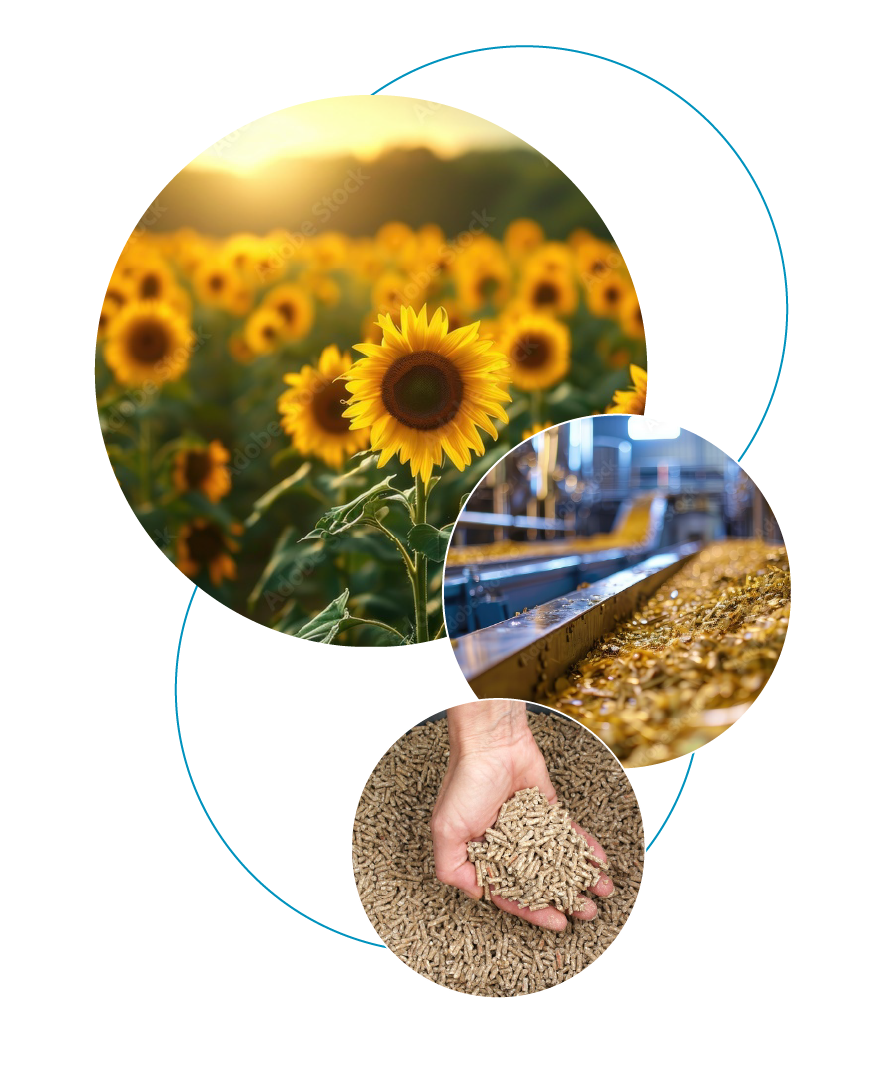
STET’s animal feed processing equipment uses water-free electrostatic separation technology to process suitable raw ingredients from pulse and oilseed crops, as well as byproducts such as sunflower meal, canola meal, and brewers’ and distillers’ spent grains. This dry process separates particles based on differences in their electrical charging behavior, producing protein-enriched animal feed ingredients without adding water or chemicals during separation.
Examples of what you can generate using STET:
- A non-GMO high-protein ingredient from sunflower meal that is excellent for aquafeed diets
- A product from canola meal that has equivalent protein content to soybean meal
- Upcycled feed products from the grains used in the production of beer, spirits, and bourbon
Unlock Meal and Spent Grain Potential with STET
The benefits of using STET dry electrostatic separators for animal feed include:
- No water. No chemicals. You eliminate water usage, wastewater generation, and contamination of harmful chemicals.
- Continuous, high-rate, single-step process. With processing capacities of up to 15 tons per hour, the STET separator integrates seamlessly into existing workflows, providing adjustable control over product quality with user-friendly automation options.
- Reduced costs. Our completely dry electrostatic separation translates into lower operational costs, less energy consumption, minimal maintenance requirements, and reduced environmental remediation costs. And our efficient use of waste byproducts increases the value of feed ingredients, for more economically sustainable operations.
- Easy to implement. Our compact equipment fits easily within your process layouts, and we make the permitting process simple.
- Durable and long-lasting. STET electrostatic separators have a long operational life, especially when compared to other types of separation equipment.
- End-to-end solution. From initial concept to fully permitted and supported plant, STET has all the technology, equipment, services, and support you need to optimize your animal feed business.
The STET™ End-to-End Service Model
Evaluate
- Assess customer needs
- Sample testing
- Bench-scale testing
Trial
- Pilot plant trials (in-house at STET)
- Full-service lab testing
- Pilot-scale trials of large samples
- Optimization of prep steps (milling, drying, deglomeration)
Design
- Confirm plant design through pilot plant trials
- Control system design
- Finalize plant design
- Estimate construction, production, and manufacturing costs
Build/Install
- Develop detailed engineering (typically done by a third-party specialist)
- Manufacturing of proprietary parts
- Construction of the plant
Optimize
- Ongoing maintenance program
- Technical support
- Scale-up as needed
- Warehousing & inventory
Support
- Ongoing maintenance program
- Technical support
- Warehousing & inventory
FAQs
What separation technology is used to remove impurities in animal feed ingredients?
Electrostatic separation is one of the best technologies for refining animal feed ingredients because it separates particles based on differences in their electrical properties without using water or chemicals. It can help concentrate protein and improve ingredient quality. Other effective methods include air classification, screening, and mechanical separation, depending on the feed material and desired outcome.
How does feed separation technology improve the market value of animal feed ingredients?
Feed separation technology can increase market value by concentrating protein and improving the nutritional profile of raw materials and processing byproducts. Dry electrostatic separation can turn sunflower meal, canola meal, and spent grains into higher-value feed ingredients while reducing water, chemical, energy, and waste-management requirements associated with conventional wet processing.


